Strike disrupts public transport as housing reform takes centre stage ahead of the November 29 national elections.Listen (3 mins)
By AFP and AP
Published On 11 Nov 202611 Nov 2026
|
Updated: 9 hours agoUpdated: 9 hours ago
Millions of workers across Spain are striking to demand government action over the country’s housing crisis, less than three weeks before a national election that could bring the far right to power.
The 24-hour walkout, which began at midnight on Wednesday, disrupted public transport and forced businesses, factories and shops to scale back operations or close entirely across the eurozone’s fourth-largest economy. It’s Spain’s first general strike in 14 years.
Recommended Stories
list of 3 items
end of list
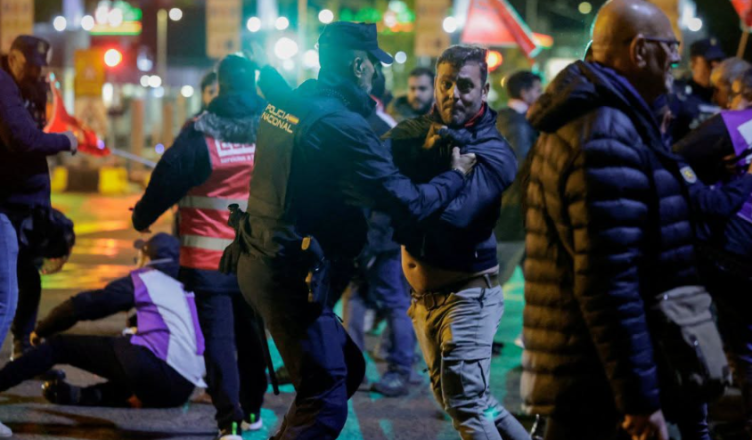
Minor incidents were reported in the first hours, including roadblocks with burning tyres in Barcelona, the second-largest city in the country. There were also scuffles between picketers and police near the country’s main wholesale market on the outskirts of the capital, Madrid.
The two main unions that called the strike, UGT and CCOO, reported widespread participation in the early hours “with significant work stoppages in strategic sectors”, including 90 percent in the automotive and port sectors, according to a statement posted on social media.

The CEOE organisation, which represents business leaders, said in a statement that the impact varied by region and area of work, with a “low participation” in most sectors.
The UGT and CCOO unions called the strike following a wave of nationwide protests over access to housing, sparked by the eviction in September of Maricarmen Abascal, an 87-year-old Madrid pensioner who died several days later.
The demonstrations included a five-week occupation of Madrid’s central Puerta del Sol square, where hundreds of tents were pitched, sparking imitations in other cities.
The average rent in Spain has almost doubled over the past 10 years, eating into household budgets and angering voters.
Spain’s socialist Prime Minister Pedro Sanchez called a snap election for November 29 after his minority government failed to secure parliamentary approval for a package of housing measures proposed in response to the protests.
“This is not a strike against anyone, but rather one in favour of a common response from all levels of government to a real problem, which is access to housing,” he said in an interview published Sunday in the daily newspaper La Vanguardia.